The Importance of Accurate Shadow Mapping in Realistic Games
28 February 2026
In the world of modern gaming, one thing that often slips under the radar for many players—but is absolutely vital for immersion—is shadow mapping. Sounds technical, right? But here’s the deal: without accurate shadows, even the most beautifully designed scene can feel fake and flat. It's like watching a high-budget movie with characters that don't cast any shadows. Weird, isn't it?
So, let’s talk shadow mapping—what it is, why it matters, and how it transforms our gaming experiences from "meh" to "OMG, did you see that?!"
What Exactly Is Shadow Mapping?
Alright, let’s not get too tangled in tech jargon. At its core, shadow mapping is a technique used in 3D graphics to determine which parts of the scene should be in shadow. It’s like the game is asking, “Hey, where’s the light coming from, and what’s blocking it?”Imagine sunlight streaming through a window. The objects in its path will cast shadows depending on the light’s angle and distance. Shadow mapping replicates this in virtual environments. It lets the game render dynamic, believable shadows in real time—super crucial for realism.
Shadows: More Than Just A Dark Smudge
Let’s get one thing straight: shadows aren't just patches of darkness thrown in for mood. They do a lot more heavy lifting than you might think.🎮 Depth Perception and Spatial Awareness
Ever noticed how you automatically judge the distance between objects based on the shadows they cast? That’s your brain using shadows to help you understand depth. In games, this is crucial for navigation. Without accurate shadows, distances feel off, and the world seems flatter.💡 Lighting Realism
Good shadows make lighting believable. If you’re walking through a dimly lit hallway in a horror game, flickering shadows on the wall set the tone. Poor or missing shadows kill that vibe instantly.🌍 Environmental Storytelling
Think of a large tree casting long shadows across a valley during sunset in an open-world game. That one visual can tell you it’s late in the day, hint at the time cycle, and even affect gameplay. Shadows are subtle storytellers.
The Evolution of Shadows in Games
We’ve come a long way from the blocky, static shadows of early 3D games. Remember those? Just little black shapes glued to the floor beneath a character, no matter the lighting conditions. Cute, but very 2000s.Let’s take a quick trip down memory lane:
🎮 Early Shadows: Flat and Static
In the early days, shadows were mostly painted onto the environment. They didn’t change with light or player movement. These were mostly fakes—tricks to give the illusion of dimension.💼 Mid-Gen Consoles: Dynamic But Limited
By the time the PS3 and Xbox 360 rolled around, we got more dynamic shadows. They moved with characters and environment elements but often suffered from jagged edges or bad aliasing. Not exactly eye candy.🚀 Today’s Standards: Real-Time, High-Resolution Shadow Maps
Triple-A games today use advanced shadow mapping techniques—sometimes mixed with ray tracing—to create crisp, beautiful shadows that change with every flicker of the light. It's like moving from a sketch to a photo-realistic painting.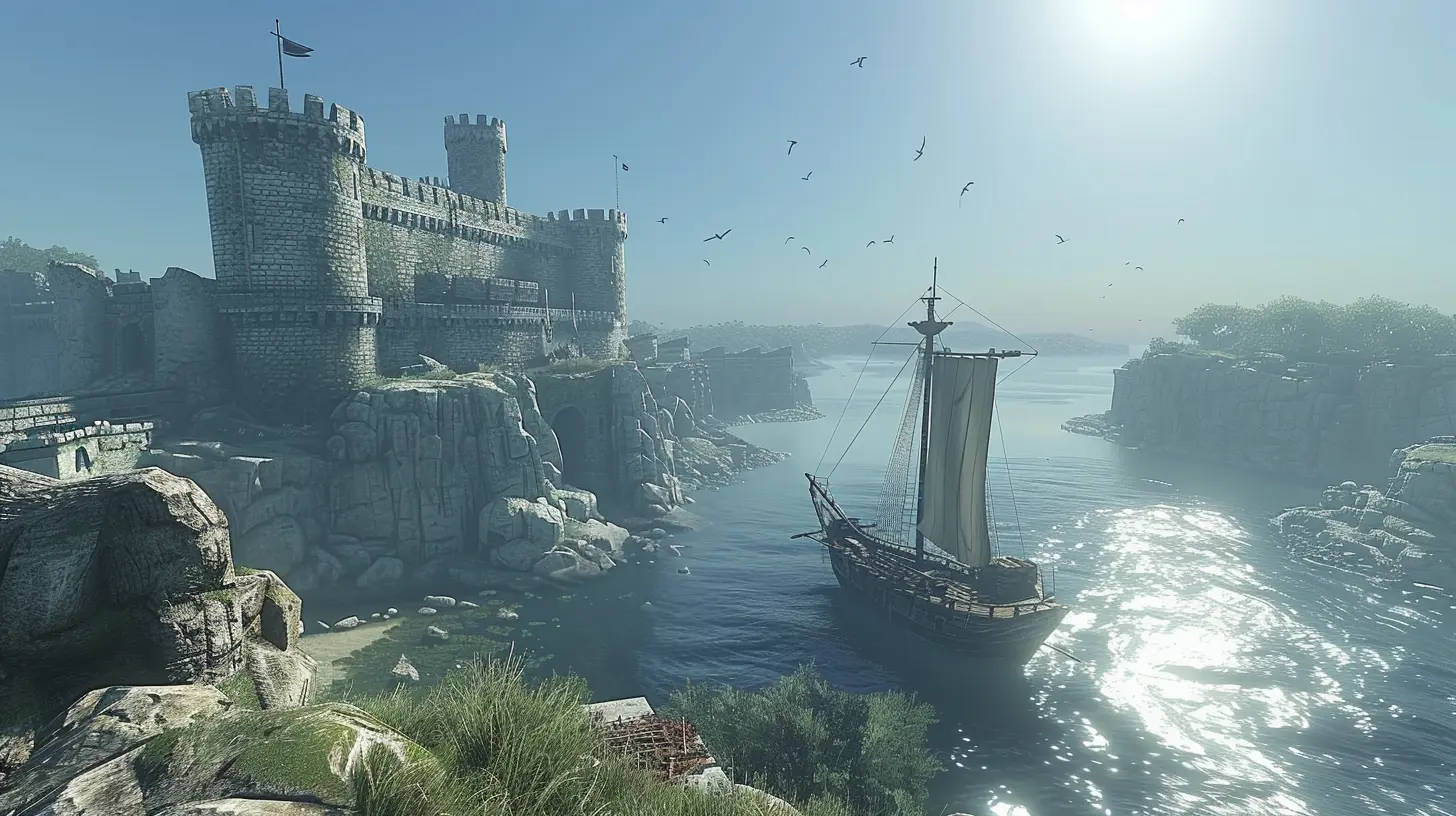
Why Accurate Shadow Mapping Is a Game-Changer
Alright, let’s dig deeper. Why is “accurate” shadow mapping such a big deal? Isn’t a shadow just a shadow?Short answer: Nope.
Longer answer? Let’s break it down.
🧠 Psychological Immersion
Here’s the thing—our brains are wired to pick up on inconsistencies in real-world physics. If a person walks past a light source and doesn’t cast a proper shadow, your mind subconsciously notices. That breaks immersion. Accurate shadow mapping keeps your brain “tricked” into believing what you see is real.✨ Visual Polish
Even if you’re not consciously noticing shadows, you feel their impact. Developers use shadows to add richness and subtlety to scenes. They define shape, mood, and motion. Inaccurate shadows? It’s like wearing sunglasses indoors—everything’s harder to read.✅ Gameplay Mechanics
And yeah, let’s not forget gameplay. Shadows aren't just for visuals. Stealth games like Splinter Cell or Hitman use shadows as core game mechanics. You hide in them. You track enemies by their shadows. Get those wrong? It’s not just immersion that breaks—it’s the gameplay itself.Challenges in Shadow Mapping (It Ain’t Easy)
Now, before we assume this shadow stuff is a walk in the park for devs, let’s talk about the challenges involved.🔄 Frame Rate vs. Realism
High-quality shadow maps are expensive—computationally speaking. The more detailed and accurate the shadow, the harder your GPU has to work. That can lead to frame drops and performance issues.So game devs have to balance. They might reduce shadow quality to keep the game running smoothly or use tricks like cascaded shadow maps to focus detail where it's needed.
🧩 Shadow Aliasing and Artifacts
Ever see those jagged, flickering shadows that dance around like static on a TV? That’s aliasing. Shadow maps can suffer from all kinds of visual hiccups if not implemented carefully. Fixing them often demands high-resolution textures and efficient filtering techniques.🌩 Dynamic Lighting = Dynamic Complexity
In static lighting, shadows are predictable. But once you introduce dynamic light sources (torches, lightning, car headlights), things get messy. The game has to recalculate shadows constantly, and that eats up performance headroom.Techniques That Make Shadows Shine
So how do developers pull off great shadows without frying your PC?🗺 Cascaded Shadow Maps (CSM)
These are used to split the screen into multiple regions, each with its own level of shadow detail. Close objects get crisp shadows, while distant ones are simplified to save resources. Super smart, right?👀 PCF (Percentage Closer Filtering)
This helps smooth out those nasty jagged edges. It’s kind of like blending the edges of a shadow to feel more natural. Less “Minecraft,” more “photorealistic.”🔎 Variance Shadow Mapping
This technique uses statistical methods to reduce noise and artifacts. It’s a bit trickier but often leads to softer, more realistic shadows—especially helpful in foggy or surreal environments.💡 Real-Time Ray Traced Shadows
Cutting-edge games are now embracing ray tracing for ultra-realistic lighting. It’s not just about making shadows look good—it’s about making them behave like real-world ones. You get reflections, soft penumbras, and accurate occlusion. It’s computationally heavy but jaw-droppingly beautiful.Real-World Game Examples Worth Mentioning
Let’s highlight some games that aced their shadow mapping game:🎮 The Last of Us Part II
Talk about atmosphere! From the rustling leaves casting intricate shadows to the way Ellie moves through soft evening light, this game nails shadow realism. It adds so much to the emotional tone.⚔️ Ghost of Tsushima
This samurai epic uses shadows not just for realism but for cinematic flair. The dynamic weather and time-of-day cycles create a constantly evolving light and shadow play that complements the storytelling beautifully.🚗 Cyberpunk 2077 (Post-Patch!)
Okay, it had a rough start, but with the updates and ray tracing, Neo Night City looks alive. The neon signs casting vibrant shadows on wet pavement? Chef’s kiss 😘.So… How Much Do Shadows Really Matter?
You tell me—would you feel as creeped out in a dark cave if the torch your character carried didn’t cast flickering shadows on the walls? Would it be as satisfying sneaking behind enemies if you couldn’t see your own shadow creeping up on them?Accurate shadow mapping might not be the main thing you notice when you play, but take it away, and you’ll feel it instantly. It’s like removing the bass from a song—it might still “work,” but it loses its soul.
What Lies Ahead: The Future of Shadow Mapping
With GPUs getting stronger, and engines like Unreal Engine 5 pushing boundaries, we’re entering a golden age of realistic lighting and shadow fidelity.AI-driven shadow approximations, hybrid ray tracing, and even neural rendering are on the horizon. That means fewer compromises and more wow moments. Even indie developers now have access to tools that were once reserved for billion-dollar studios.
Final Thoughts: Shadows Are the Unsung Heroes
So the next time you’re exploring a haunted house in a survival horror game or watching the sun cast long shadows across a battlefield, take a moment to appreciate it. That's not just artistry—that's math, physics, and creativity all rolled into one.Accurate shadow mapping might not get the same love as flashy explosions or high-res textures, but trust me—it’s one of the most important pieces in the puzzle of realism. When done right, it pulls you in. It keeps you grounded in a digital world that, for a few hours, feels just like reality.
So yeah, hats off to shadows—the silent workhorses of immersive gaming.
all images in this post were generated using AI tools
Category:
Realism In GamesAuthor:

Lana Johnson
Discussion
rate this article
2 comments
Theo McWhorter
Great insights! Accurate shadow mapping truly enhances immersion in games, adding depth and realism. It's fascinating to see how tech evolves to support this!
March 1, 2026 at 3:53 AM
Lana Johnson
Thank you! I'm glad you found the insights valuable. Accurate shadow mapping indeed plays a crucial role in creating immersive gaming experiences.
Melody Adkins
Who knew shadows could steal the spotlight? Accurate shadow mapping: making gaming worlds feel so real, even your couch might ask for a shadow of its own!
February 28, 2026 at 5:27 PM
Lana Johnson
Thank you! Accurate shadow mapping truly enhances immersion, making every element in the game world, even the couch, feel alive and part of the experience!