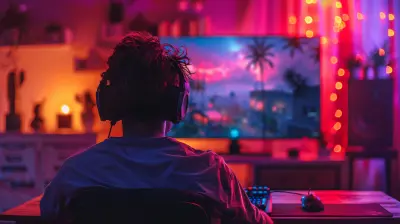
The Science behind Realistic Facial Expressions in Video Games
20 March 2026
When you think about the best video game characters, what comes to mind? It’s probably not just the gameplay mechanics or the storyline—those are great, but there's something deeper. It’s how alive they feel. One moment, you’re staring at a character on the screen, and the next, they’re frowning, smirking, or tearing up in a way so convincing it almost feels like you're watching a close-up in a blockbuster movie. That connection? It’s all thanks to the magic of realistic facial expressions. But how do game developers pull this off? What’s the science behind it? Let’s dig in.
Why Realistic Facial Expressions Matter
First off, let’s address the big question: why even bother? Games were perfectly fine back in the pixelated days, right? Sure, but times have changed. In today's gaming landscape, immersion is the holy grail, and nothing breaks immersion faster than lifeless characters.Imagine playing a story-driven game like The Last of Us or Red Dead Redemption 2, but instead of seeing Joel's anguish or Arthur's sly grin, you're met with a stiff, frozen face. You’d feel like you were watching a shopping mannequin try to act. Realistic facial expressions turn characters into, well, people. They make us laugh, cry, and invest emotionally in the story. And believe it or not, nailing those expressions is as much a science as it is an art.
The Building Blocks of a Human Face
To replicate realistic facial expressions in video games, developers need to understand how the human face works. It’s not just about slapping a smile or a frown on a character—it’s so much deeper than that.Our faces are controlled by over 40 muscles, each capable of small but significant movements. Think about how your eyebrows raise slightly when you’re surprised or how one corner of your mouth curls up when you're being sarcastic. Those micro-movements are the real deal, and they can make or break the believability of a digital character.
Game developers rely on something called the Facial Action Coding System (FACS) to study these movements. Developed by psychologists, FACS breaks down every possible facial expression into individual muscle movements, called "action units." For example:
- A smile might combine cheek-raising, lip-corner-pulling, and mouth-opening action units.
- A frown could involve brow-lowering and lip-pressing action units.
By understanding how these tiny movements work together in real life, developers can recreate them virtually.
Motion Capture: The Game Changer
You’ve probably heard the term "mo-cap" (short for motion capture) thrown around in gaming circles. This tech has been a major game-changer when it comes to creating realistic facial expressions.Here’s how it works:
Actors wear special suits covered in tiny reflective markers, and their performances are recorded using dozens of high-speed cameras. For facial expressions specifically, many studios use head-mounted cameras or dot markers placed directly on the actor’s face. When the actor smiles, frowns, or cries, every muscle movement is captured in extraordinary detail.
Take Andy Serkis, for instance—the guy who brought Gollum to life in The Lord of the Rings. His groundbreaking work in motion capture has paved the way for highly expressive characters in video games too. Think Ellie in The Last of Us or Aloy in Horizon Zero Dawn. That subtle twitch in their lips? That furrowed brow? Thank mo-cap for that.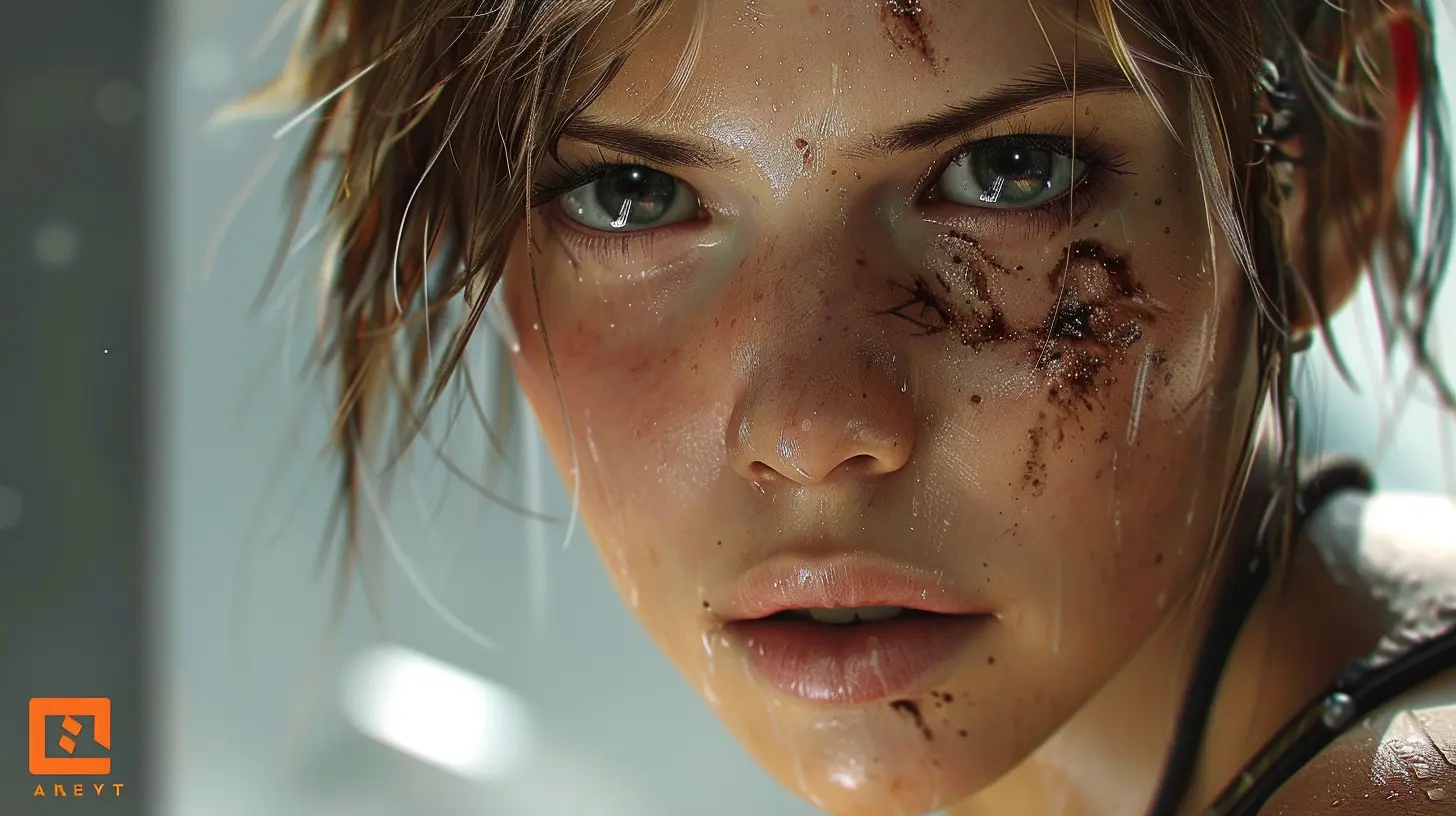
Algorithms, AI, and the Tech Behind It
But motion capture is just the starting point. The data collected has to be processed and translated into something the game engine can use. This is where advanced algorithms and artificial intelligence come into play.Modern game engines like Unreal Engine 5 and Unity use facial rigging—essentially, a skeleton beneath the digital skin. Each "bone" in the rig corresponds to a muscle or group of muscles in the human face. Developers adjust this rig to match the motion capture data or even create new animations manually.
Then there’s AI, which has been a game-changer in procedural animation. AI can predict how a character’s face should react in real time based on the context. Say your character just got punched in the gut. Without AI, the reaction would be pre-scripted and possibly look out of place. With AI? The system calculates the most believable reaction on the fly, making the character feel more alive and responsive.
The Role of Textures and Lighting
Okay, so muscles and bones are cool, but what good is a realistic smile if the skin looks like plastic? This is where textures and lighting come into play.High-resolution textures add those tiny details that make a face look human—like freckles, wrinkles, or the faint sheen of sweat. And let’s not forget subsurface scattering, a fancy term for the way light passes through skin. Without it, skin can look dull and lifeless; with it, a character's face has that subtle glow you’d expect in real life.
Lighting is the cherry on top. Shadows add depth to facial expressions, while highlights emphasize certain features. Ever notice how the lighting shifts when a character moves closer to the camera in a dramatic moment? That’s not by accident. Developers spend hours fine-tuning these details.
Challenges Developers Face
Of course, it’s not all smooth sailing. Creating realistic facial expressions comes with its own set of challenges. For one, it’s incredibly resource-intensive. From motion capture equipment to powerful rendering tools, the process can eat up a significant chunk of a studio's budget.Then there’s the challenge of keeping things consistent. If one character’s face looks super realistic but another’s still has that "dead-eye" stare, it can ruin the overall experience. And let’s not even get started on uncanny valley territory—when a face looks almost human but just off enough to make you uncomfortable.
The Future of Facial Expressions in Games
The good news? Technology is evolving faster than ever. With the advent of machine learning, procedural animation, and real-time rendering, the gap between virtual faces and real ones is closing.One exciting development is the use of neural networks to generate lifelike expressions without the need for extensive motion capture. This can democratize the process, allowing smaller studios to create AAA-quality characters without the AAA budget.
Another promising frontier is VR (virtual reality) and AR (augmented reality). In VR especially, realistic facial expressions aren’t just a bonus—they’re essential. Imagine talking to an NPC (non-playable character) in a VR game and seeing them respond with genuine emotion. That level of immersion could redefine storytelling in games.
Wrapping It Up
Realistic facial expressions are more than just a "nice touch" in video games—they're a necessity in today's era of immersive storytelling. From the science of muscle movements to the art of motion capture and the role of advanced AI, it’s a fascinating blend of technology and creativity.So the next time you find yourself shedding a tear during an emotional cutscene or smirking at a character’s witty remark, take a moment to appreciate the sheer amount of work that went into making that possible. Because behind every smile, every frown, every raised eyebrow, there’s a team of dedicated scientists, animators, and developers making magic happen.
all images in this post were generated using AI tools
Category:
Realism In GamesAuthor:

Lana Johnson
Discussion
rate this article
2 comments
Hugo Anderson
“Finally, a breakthrough! Now my character’s awkward smile matches my epic fail skills. Thanks, science!”
March 28, 2026 at 5:01 AM
Lana Johnson
Glad you enjoyed the read! It's exciting to see how science enhances our gaming experiences!
Astrid McConnell
Realistic facial expressions in video games are not just a luxury; they're essential. They bridge the emotional gap between players and characters, creating immersive experiences that resonate deeply. If developers aren't prioritizing this, they're missing a crucial opportunity to elevate storytelling in gaming.
March 23, 2026 at 4:31 AM
Lana Johnson
I completely agree! Realistic facial expressions are vital for enhancing emotional connections in gaming, making storytelling more impactful and immersive for players. Developers should definitely prioritize this aspect to fully engage their audience.