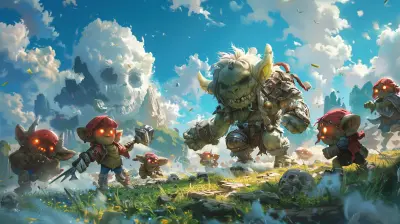
The Importance of Lore and Worldbuilding in Game Culture
15 June 2026
Let’s be real—there's nothing more satisfying than sinking into a video game and feeling like you’ve stepped into a living, breathing universe. Whether you're scaling the snowy peaks of Skyrim, getting caught in the political web of Final Fantasy XIV, or deciphering cryptic notes in Elden Ring, the world around you matters just as much as the gameplay itself.
That, my friend, is the power of lore and worldbuilding.
These two elements are more than just fancy storytelling tools. They shape how players connect with their characters, their environment, and even with other fans. In fact, in today’s gaming landscape, lore and worldbuilding have morphed into essential parts of game culture.
So, let’s dive deep—pun absolutely intended—into why lore and worldbuilding are the unsung heroes of your favorite games.
What Is Lore and Worldbuilding Anyway?
I know, I know—these terms get thrown around a lot. But what exactly do they mean?- Lore is the backstory. It’s the rich tapestry of myths, history, characters, events, and legends that explain why the world is the way it is.
- Worldbuilding is the process of creating that world—the cultures, politics, geography, religions, economies, languages, and even social norms that make it feel real.
In simpler terms, if a game were a cake, gameplay would be the flavor, but lore and worldbuilding? That’s the icing, the layers, the decorative flowers—and let’s be honest, the reason you came back for a second slice.
The Secret Sauce to Immersion
Ever wandered through the desolate streets of Rapture in BioShock and felt a chill down your spine—not because of a jump scare, but because the world felt so... believable?That's immersion, and it's lore and worldbuilding that make it happen.
When a game gives context to why things are the way they are, you suddenly don’t just play—you exist in that universe. Every rusty pipe, abandoned journal, and hidden note feels like a breadcrumb in a much larger story.
Without this depth, worlds feel flat, like cardboard sets in a school play. But with strong lore? You get full-on cinematic universes.
Lore Builds Emotional Connections
Let’s talk heartstrings.When you understand a world’s history, wars, and character motivations, suddenly your actions carry weight. Think about Mass Effect. Would saving the galaxy hit as hard if you didn’t know the backstory of the Krogan Rebellions or the tragic past of the Quarians?
Lore helps you care. It’s what turns NPCs into real people with pasts, traumas, hopes, and dreams. So when a beloved character dies or a town falls, it’s not just pixels—it’s personal.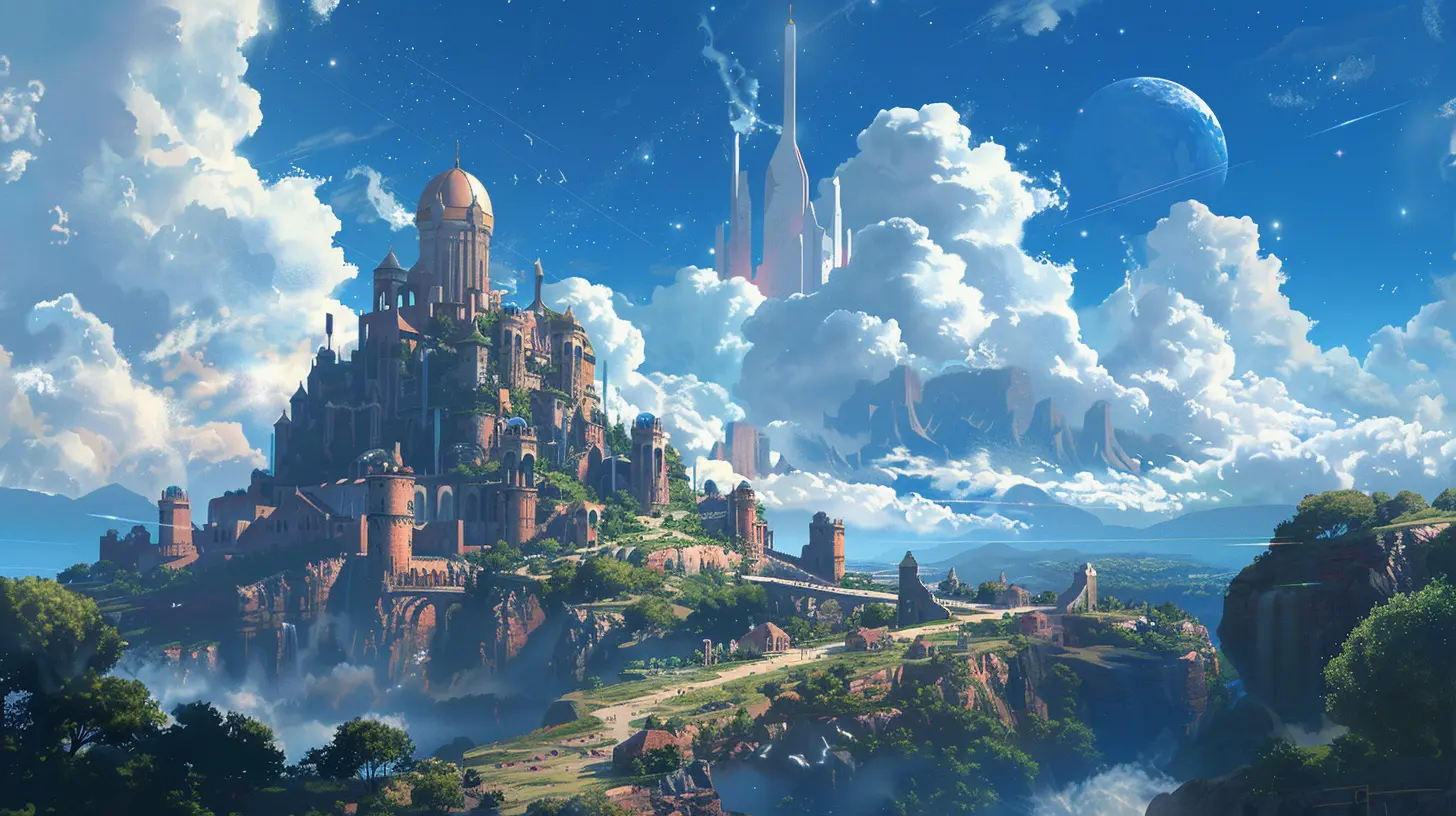
Worldbuilding Fuels Fan Theories and Communities
Here’s a fun fact: Some people spend more hours reading Item Descriptions in Dark Souls than actually playing the game. Why? Because the game’s storytelling is subtle, cryptic, and intentionally scattered.This drives players to form communities, share theories, and piece together the narrative like digital archaeologists. It’s like being part of a treasure hunt where the prize is a deeper understanding of the game's universe.
Worldbuilding opens the door for passionate discussions, fan art, cosplay, and lore videos that rack up millions of views on YouTube. It doesn’t just stay in the game—it spills over into real-life culture.
Games That Nailed It (And Set the Bar)
1. The Elder Scrolls Series
Ah, Tamriel—a continent so detailed it has its own goddamn calendar, races, religions, political systems, and endless books to read. Bethesda didn’t just make a game; they built a world that feels just as rich as anything in Tolkien’s legendarium.2. The Legend of Zelda
From Hyrule’s cyclical history to the Triforce lore, the Zelda games are threaded with a timeline that spans generations. Even when games are decades apart, there are subtle connections that reward long-term fans.3. FromSoftware Titles (Dark Souls, Bloodborne, Elden Ring)
No spoilers here—but if you know, you know. These games don’t spoon-feed story; they make you work for it. And that mystery? It’s addictive.4. The Witcher Series
Geralt’s world is gritty, political, magical, and brutally honest. Everything from the calendar to the currency is purposefully designed. And it’s based on books—so the source material is already rich with detail, allowing the game to expand and thrive.Not Just For RPGs: Lore in Shooters, MOBAs, and Even Battle Royales
Think lore is only for fantasy nerds? Guess again.- Overwatch created an entire universe with diverse heroes, each with compelling backstories and relationships.
- Apex Legends adds new legends with detailed motivations and intertwining plot threads every season.
- Even Fortnite—yup, the dance-emote game—has a surprisingly deep metaverse plot with time travel, aliens, and multiverse shenanigans.
The point? Worldbuilding doesn’t have to live in a dungeon. It thrives wherever developers care enough to craft it.
Lore Keeps Games Alive Long After Release
Games don’t die when the credits roll.Take World of Warcraft. That game is ancient by gaming standards, but its lore-rich expansions and evolving storyline keep it alive and thriving. It's like a TV series that just won’t quit (and we’re not mad about it).
Same with Final Fantasy XIV. What saved it from a disastrous launch? You guessed it—stellar story writing and worldbuilding that transformed it into one of the best MMORPGs of all time.
A game with great lore ages like fine wine. Players revisit it, discuss it, and even replay it to experience the story again. In contrast, a game with no lore? It’s a flash in the pan. Fun while it lasts, but forgettable.
Careers and Communities Built on Lore
Some people don’t just play games—they build entire careers decoding them. We’re talking:- YouTubers doing hour-long analysis videos
- Twitch streamers doing lore deep-dives
- Fan-fiction authors expanding the universe
- Modders adding their own spin to the story
Communities form around decoding obscure plot points and filling in narrative gaps. And that kind of engagement? It's golden for both devs and players.
A Tool for Representation and Diversity
Here’s another angle—lore allows developers to write worlds that reflect our own in nuanced ways. Through worldbuilding, games can introduce:- Cultures and traditions
- Diverse mythologies
- Non-binary, POC, queer characters with depth and purpose
Representation is more meaningful when it’s embedded in the lore and not just tacked on like a checkbox. A character's identity is powerful when it's tied to their history and role within the world.
How Developers Use Lore Strategically
Want to know a little secret? Lore is also a super-smart dev tool.By inserting heavy worldbuilding, devs can:
- Tease future content
- Justify game mechanics
- Create crossovers and expansions
- Offer Easter eggs to die-hard fans
It’s like laying down narrative breadcrumbs that players follow—sometimes for years. And the reward? A loyal fanbase that sticks around.
Tips for Gamers Who Want to Get Into Lore
Not sure where to begin? Here's a quick cheat sheet:- Read item descriptions (they often hide juicy lore!)
- Talk to NPCs—some spill world-shattering info
- Watch lore recap videos (they’re everywhere)
- Visit in-game libraries or codexes
- Dive into wikis or forums for deeper theories
Start small, go at your pace, and most importantly—enjoy the ride!
Final Thoughts: Let’s Give Lore the Credit It Deserves
Gameplay might get you through the door, but it’s the world—the atmosphere, the history, the characters—that makes you want to stay awhile.In a time when games are reaching cinematic levels of ambition, lore and worldbuilding are no longer optional. They’re essential. They enrich gameplay, fuel fandoms, and make each pixel matter a little more.
So yeah, shoot your zombies, race your cars, fight your bosses—but don’t forget to read that dusty old scroll lying next to the skeleton in the cave. It probably holds the key to why this world is unforgettable.
all images in this post were generated using AI tools
Category:
Game CultureAuthor:

Lana Johnson
Discussion
rate this article
1 comments
Rhea Jackson
Lore is just fancy talk for "Let's make players curious!
June 21, 2026 at 5:06 AM
Lana Johnson
I appreciate your perspective! Lore definitely stirs curiosity, but it's also about creating depth and connections that enhance the gaming experience.