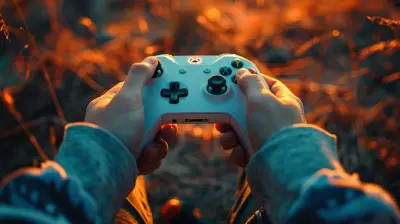
How Speedrunning Became a Global Subculture
25 June 2026
If you've ever watched someone complete an entire game in under 10 minutes — a game that took you months to beat — then you've already had a taste of the speedrunning world. But what began as a quirky way to challenge personal bests has evolved into a full-blown global subculture. Today, speedrunning isn’t just a hobby. It’s a lifestyle. A community. A stage where thousands of gamers gather to push the limits of what’s possible in gaming.
Let’s hit the gas and dive deep into how speedrunning raced from underground forums to become a worldwide phenomenon.
What Exactly Is Speedrunning?
Before we jump into its meteoric rise, let’s answer the obvious question: what the heck is speedrunning?Speedrunning is the act of completing a video game — or a specific part of it — as fast as humanly (and sometimes inhumanly) possible.
Whether you're gunning for a world record or just trying to beat your last time, the objective is simple: finish fast. But within that goal lies a rabbit hole of complexity — from precise movement and frame-perfect inputs to exploiting glitches and manipulating the game’s code.
It's not just about going fast. It's about going flawlessly.
The Humble Beginnings of Speedrunning
Speedrunning didn’t start with Twitch or YouTube. In fact, it goes way back — all the way to the early ‘90s and even before.Doom and the Birth of the Scene
One of the first major speedrunning communities grew out of the classic first-person shooter, Doom. Players would record their playthroughs using the game's built-in demo recorder and share these files via BBS (Bulletin Board Systems — yes, it was that old-school).The main attraction? Beating levels as quickly as possible, often with insane accuracy and strategy. In 1994, a site called "Compet-N" popped up, dedicated entirely to Doom speedruns. And just like that, the race began.
Quake and Tool-Assisted Runs
Following Doom, Quake added fuel to the fire. It introduced more room for sophisticated movement techniques like bunny hopping and rocket jumping — soon becoming a speedrunner’s playground. Around this time, we also saw the rise of “Tool-Assisted Speedruns” (TAS), where players used emulators to slow down gameplay, manipulate inputs, and produce “perfect” runs purely for entertainment or proof-of-concept.While TAS runs weren’t considered "legit" in terms of records, they played a crucial role in understanding game mechanics and inspiring real-time runners.
The Internet Changed Everything
If speedrunning had a secret sauce, it was the internet. With platforms like YouTube and later Twitch and Reddit, the niche community transformed into a massive, connected global fandom.YouTube Opens the Floodgates
When YouTube launched in 2005, it became the perfect place to watch, share, and celebrate speedruns. Suddenly, gamers from all over the world could get inspired by runners tearing through games like Super Mario 64, The Legend of Zelda: Ocarina of Time, or Metroid Prime. These runs often went viral, attracting millions of views and turning average gamers into legends overnight.Ever heard of the name Narcissa Wright or Siglemic? If you were watching Mario 64 speedruns in the 2010s, you probably have.
Twitch Brought It To Life
Then came Twitch.Live-streaming wasn’t just a game-changer — it was the game-changer.
Twitch allowed runners to showcase their skills in real time, interact with fans, and build tight-knit communities around specific games or categories. Watching a speedrunner endure thousands of resets just to shave off half a second was now gripping entertainment.
It was like watching an Olympic athlete train live — except with more pixelated plumbers and less sweat.
The Rise of Games Done Quick (GDQ)
No conversation about speedrunning is complete without mentioning GDQ.What Is GDQ?
Games Done Quick (GDQ) is a charity speedrunning marathon that started in 2010. Twice a year — once in the winter (Awesome Games Done Quick) and once in the summer (Summer Games Done Quick) — the world’s best runners come together to speedrun day and night for a week straight. The catch? It’s all broadcast live to raise money for charities like Doctors Without Borders and the Prevent Cancer Foundation.In just over a decade, GDQ has raised tens of millions of dollars. It’s not only a celebration of speedrunning skill but also one of the most wholesome, passionate corners of the gaming universe.
The Community Effect
GDQ helped foster a sense of camaraderie that pushed the speedrunning subculture into the mainstream. Runners would shout out other runners, donate prizes, and educate viewers about the intricacies of the run — making even obscure speedrun categories fun to watch.It’s volunteer-based, community-driven, and full of passion-packed moments.
Categories That Keep it Interesting
You might think a speedrun is just running from start to finish. But the community loves to mix things up. That’s where different categories come into play, each with its own rules and appeal.Any%
Complete the game as fast as possible using any means necessary — including game-breaking glitches and skips.100%
Complete the game fully: every secret, every item, every boss. It’s like running a marathon wearing rollerblades… uphill.Glitchless
As the name suggests, no exploits allowed. This is all about pure skill and execution.Low%
Complete the game with the fewest possible upgrades or items. It's often ridiculous and requires surgical precision.Meme Categories
Yup, those exist too. From “All Dogs Pet” in The Legend of Zelda: Twilight Princess to “Go Fast and Die” in Dark Souls, the creativity is endless.Why Do People Speedrun?
Good question. What drives someone to beat the same game a hundred, heck, even a thousand times?The Thrill of Mastery
There’s something deeply satisfying about mastering a game so thoroughly that you can predict enemy patterns, optimize your path, and manipulate every variable to your advantage.It’s like turning a chaotic storm into a perfectly choreographed dance.
The Chase for Records
For many, it’s about chasing the near-impossible: the world record. That top spot on the leaderboard isn’t just bragging rights — it’s a badge of honor that can last years or vanish within minutes.The Community
Let’s be real — the speedrunning community is one of the most welcoming and collaborative in gaming. Runners share strategies, help newcomers, and celebrate each other’s victories. It’s way less sweaty than you’d think.Speedrunning as Performance Art
Here's a fresh way to think about it — speedrunning is like jazz.You’ve got structure, sure, but there’s room for improvisation. Sometimes a run goes off-script, and the runner has to think on their feet. Every input is deliberate. Every split-second matters. It's drama, suspense, and art, all mashed into a controller.
That’s why watching speedruns can be just as entertaining as playing games yourself. It’s not just "beating a game fast" — it's storytelling through gameplay.
The Role of Technology and Tools
Speedrunning wouldn't be where it is today without some serious tech behind the scenes.Frame Counters, Timers, and Splits
Advanced timing tools like LiveSplit let runners track their time against personal bests and world records in real time. These tools keep the runs honest and the competition fierce.Emulator vs. Console Debate
While many runners still prefer original hardware, emulators allow for testing strategies, practicing specific segments, and accessing hard-to-find games. Some leaderboards separate times by platform to keep things fair.Analysis Tools
Frame viewers, input display, and practice ROMs help dissect every movement, frame by frame. It’s digital sports science at this point.Speedrunning Is Everywhere Now
It’s not just retro games anymore. From AAA titles like Elden Ring, Resident Evil Village, and Tears of the Kingdom to indie gems like Celeste and Hollow Knight, nearly every game has a speedrunning community.Even developers have caught on. Some games now come with built-in timers, leaderboards, and customizable speedrun modes. (Looking at you, Celeste.)
And with YouTube algorithms and Twitch clips pushing the best moments to the masses, speedrunning has found a permanent home in internet culture.
Where’s It All Headed?
Speedrunning shows no signs of slowing down.Esports events are starting to include speedrun showcases. Game developers are designing with speedrunners in mind. And the tech keeps getting better.
Imagine AI-powered frame optimization, real-time ghost racing against world records, or even VR speedruns where your body is the controller. Wild, right?
The future of speedrunning isn’t just exciting — it’s already here.
Final Thoughts
Speedrunning might seem like a niche corner of gaming, but it’s actually one of its purest forms. It strips away the fluff and asks, “How good can you really get?” It’s a love letter to video games, rewritten every day by thousands of passionate players who dare to go faster.So next time you beat a game, ask yourself — what if I tried to beat it... faster?
Who knows? You might just catch the speedrunning bug.
all images in this post were generated using AI tools
Category:
Game CultureAuthor:

Lana Johnson
Discussion
rate this article
1 comments
Parker Evans
Speedrunning is pure passion.
July 6, 2026 at 3:19 AM
Lana Johnson
Absolutely, the dedication and love for the game really shine through in speedrunning. It's inspiring to see how it brings people together.