How Puzzle-Based Missions Challenge the Mind
7 February 2026
Ever found yourself stuck in a game, scratching your head while staring at a puzzle that seems smarter than you? Yeah, we’ve all been there. Whether you’re trying to solve a mysterious riddle in an ancient temple or connecting switches in a sci-fi control room, puzzle-based missions in video games are more than just entertaining—they're serious brain workouts.
Let’s dive into why these mind-bending missions are so compelling, how they challenge your cognitive skills, and why game developers keep throwing puzzles in our path. Spoiler alert: it’s not just to slow us down.
What Are Puzzle-Based Missions Anyway?
Before we get ahead of ourselves, we need to know what we’re talking about. Puzzle-based missions are objectives in video games that can’t be solved by brute force or button-mashing. Instead, they require logical thinking, pattern recognition, memory, timing, or even a bit of creativity.Think of games like Portal, The Talos Principle, Tomb Raider, or even the classic Zelda series. At some point, you're going to stop running and gunning and start thinking and tinkering.
They Force You To Slow Down and Think
Most games are designed to get your adrenaline pumping. But puzzle-based missions? They’re like handing your brain a cup of coffee and saying, “Let’s figure this out together.”Imagine you're sprinting through a level, dodging enemies left and right—and boom—a locked door with a weird cipher. Suddenly, the pace halts. You’re not dodging anymore. You’re analyzing. It’s almost meditative.
This shift from action to analysis creates a balance in gameplay. It's like mixing hot sauce with a scoop of ice cream—it shouldn’t work, but somehow, it does.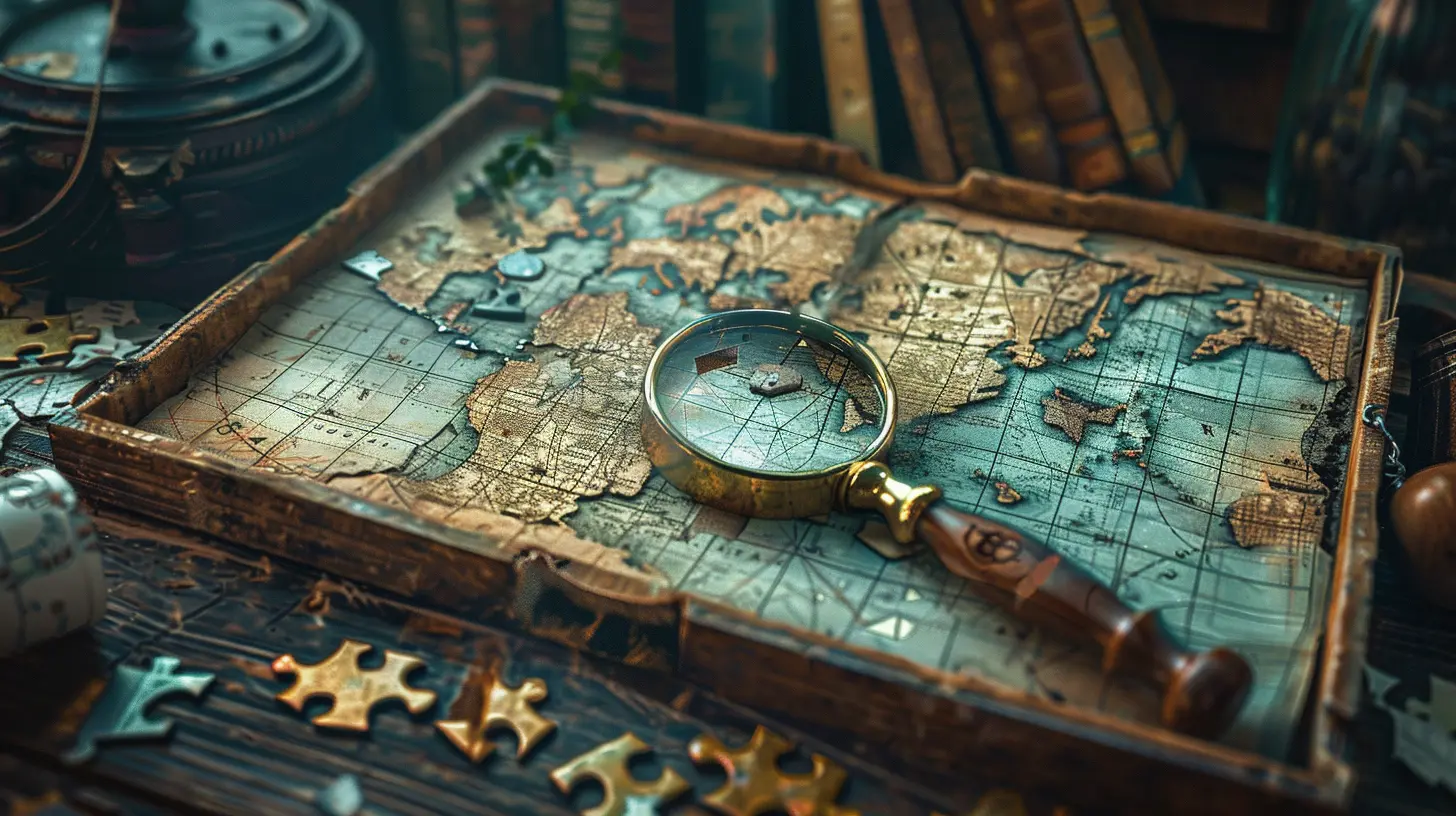
Why Our Brains Love Puzzles
Believe it or not, our brains are wired to enjoy solving problems. There’s a tiny nugget in our heads—the nucleus accumbens—that fires up like a slot machine when we finally crack a tough puzzle. It releases dopamine, the “feel-good” chemical, rewarding us for our mental effort.So when you finally figure out how to line up the mirrors to unlock that door in Skyrim, your brain is basically throwing a mini celebration.
Different Types of Puzzle Challenges in Games
Not all puzzles are created equal. Game developers use different kinds to challenge various cognitive skills. Let’s break down a few common types:1. Logic-Based Puzzles
These are your classic "if A, then B" challenges. Think levers, buttons, or sequences that require you to understand cause and effect.Example: The laser reflection puzzles in The Talos Principle — you're using logic and spatial awareness to redirect beams to their targets.
2. Pattern Recognition Puzzles
These ones test whether you can spot the odd one out or find a repeating sequence.Example: Picture-based riddles in The Witness. You have to decode increasingly complex visual patterns across the island.
3. Mechanical Puzzles
These require understanding how elements interact. Often, these puzzles mimic real-world physics.Example: Rotating gears, pulling chains, or turning valves in Half-Life: Alyx to open a path.
4. Memory Challenges
Remembering clues you saw earlier? These puzzles reward careful observation and recall.Example: In Resident Evil, you might see a symbol hours earlier, and later realize it’s the key to a secret door.
5. Riddle and Word Play
Some games get a little more cerebral with riddles, word puzzles, or even poetic clues.Example: Baba Is You completely flips traditional game logic with word manipulation puzzles.
Real Cognitive Benefits of Puzzle-Based Gameplay
Beyond entertainment, there’s some real brain-boosting going on when you tackle these missions. Here’s what those head-scratchers are doing for your mental fitness:🧠 Enhancing Problem Solving
You can’t just wing it with puzzle-based missions. They teach structured problem-solving, helping you learn how to break a big challenge into smaller, solvable parts.🧠 Boosting Memory and Recall
Remembering clues, recalling sequences, or even holding visual layouts in your head—puzzles give your memory a proper workout.🧠 Improving Focus and Patience
Let’s face it, some puzzles can be maddening (looking at you, rotating statues puzzle). But sticking with them builds mental endurance and focus.🧠 Strengthening Spatial Awareness
Games like Portal or The Legend of Zelda often ask you to manipulate your environment. That sharpens your ability to judge space and geometry.How Puzzle Missions Improve Game Design
You might think game developers are just trying to mess with our heads—but actually, puzzle missions are a clever design trick. Here’s why they’re such a crucial ingredient:🧩 Pacing Tool
Throwing puzzles in between intense action scenes gives players a breather. It’s like giving your thumbs a timeout while your brain clocks in.🧩 Engaging Storytelling
Puzzles can be more than roadblocks. Used right, they become part of the narrative. Solving an ancient puzzle to uncover a lost civilization? That’s immersive storytelling.🧩 World-Building
Puzzles often reflect the world and culture of the game. An old crypt with sliding stone blocks feels very different than a futuristic lab with laser grids. It’s not just about challenge—it’s about atmosphere.Popular Games That Do Puzzle Missions Right
Let’s geek out for a second over some games that absolutely nailed it when it comes to puzzle-based missions:🎮 Portal Series
C’mon, you knew this was coming. The Portal games are THE standard in first-person puzzle solving. You’re using a literal wormhole gun to manipulate physics—it’s like playing chess with the laws of nature.🎮 The Legend of Zelda Series
From Ocarina of Time to Breath of the Wild, you’re always dealing with temples filled with tricky mechanisms and clever layouts.🎮 The Witness
This game turns you into a walking, talking puzzle solver in a beautiful open world. No enemies—just hundreds of carefully crafted puzzles tied into the landscape and story.🎮 Tomb Raider (Reboot Series)
Lara Croft’s adventures often require both brawn and brains. Tombs, especially optional ones, are filled with clever environmental puzzles that feel like real archaeological mysteries.🎮 God of War (2018)
Amidst all the mythical monster-smashing, there are surprisingly deep puzzles using elements like Leviathan axe throws and rotating statues. They're integrated smoothly into the pace of the story—brilliant stuff.Tips to Tackle Tricky Puzzle Missions
Stuck on a puzzle and ready to throw your controller? Don’t worry—we’ve all been there. Try these tips to keep frustration at bay:- Take a step back - Sometimes walking away for a bit clears your mind better than banging your head against the wall.
- Look for patterns - Developers usually leave visual hints or repetitive elements for you to pick up on.
- Experiment freely – Don’t be afraid to try everything. There’s no shame in trial-and-error.
- Keep notes – Especially for memory-based puzzles; jotting things down can be a game-changer.
- Think like the developer – What would you do to hide a clue? This perspective often helps.
Why We Keep Coming Back to Puzzle Missions
Let’s be honest—sometimes puzzles are frustrating. But the moment you solve one? That “Aha!” moment is pure gold. It’s like cracking a safe and finding a room full of treasure, except the treasure is your own cleverness.Puzzle-based missions appeal to a mix of curiosity, satisfaction, and challenge. They don’t just push buttons on your controller—they push buttons in your brain.
Final Thoughts: The Brain and the Gamepad
In a world filled with fast-paced shooters and sprawling RPGs, puzzle-based missions remind us that sometimes the greatest enemy is confusion—and the most powerful weapon? A sharp mind.They challenge us to pause, think, and grow—even if it’s just to open a door or find a hidden room. And in doing so, they offer one of gaming’s most rewarding experiences.
So next time you hit a tough puzzle, don’t rage quit. Take a deep breath, think it through, and remember—you’re not just playing a game. You’re giving your brain a workout it’ll thank you for later.
all images in this post were generated using AI tools
Category:
Quests And MissionsAuthor:

Lana Johnson
Discussion
rate this article
2 comments
Kiera Nelson
Absolutely love how puzzle-based missions not only challenge our minds but also spark creativity! It’s like giving our brains a fun workout. Keep those puzzles coming—let’s solve and smile! 😊🧩
February 11, 2026 at 3:54 AM
Lana Johnson
Thank you! I'm glad you appreciate the blend of challenge and creativity in puzzle-based missions. Let's keep the fun going! 😊🧩
Misty Willis
Engaging puzzles elevate gaming experiences significantly!
February 8, 2026 at 5:17 AM
Lana Johnson
Absolutely! Engaging puzzles not only enhance gameplay but also stimulate critical thinking and problem-solving skills, making the gaming experience more rewarding.