Top Hardware Features Every PC Gamer Should Look For
24 April 2026
Let’s be real—building or buying a gaming PC isn’t as simple as grabbing the shiniest graphics card on the shelf and calling it a day. Whether you’re diving into fast-paced shooters, exploring massive open worlds, or just trying to outplay your friends in a cozy indie title, your hardware can make or break your gaming experience.
So, what should you actually prioritize when putting together your gaming rig? What are the non-negotiable hardware features every gamer should look for? Strap in, because we’re about to break it all down in a way that’s easy to digest—even if you're not a tech wizard.
1. The Graphics Card (GPU): The Heart of Gaming
Let’s start with the most obvious one—the graphics card. This is the muscle behind your gaming visuals. Think of it as the artist of your rig, painting each frame with all the details, lighting, and textures that make games come to life.Why It Matters:
A powerful GPU directly affects your frame rates, resolution options, and overall visual fidelity. Games are becoming increasingly demanding, and a weak graphics card can leave you stuck on low settings or even unable to run newer titles at all.What To Look For:
- VRAM (Video RAM): Aim for at least 8GB for 1080p gaming, but go 12GB or more if you’re diving into 1440p or 4K.- Ray Tracing Support: Brings realistic lighting effects. Cards like NVIDIA’s RTX series or AMD’s RX 7000 line support this.
- DLSS or FSR: Upscaling tech that boosts performance without tanking visuals.
Pro Tip:
Always balance your GPU with your monitor’s resolution and refresh rate. There's no point in dropping $1,000 on a RTX 4090 if you’re still gaming on a 60Hz 1080p screen.
2. The Central Processing Unit (CPU): Your Game’s Brain
If the GPU is the artist, the CPU is the director—calling the shots on what happens and when. It handles AI behavior, physics calculations, and background tasks.Why It Matters:
Even the best GPU can bottleneck (read: be held back) if your CPU can’t keep up. Games like strategy sims, open-world RPGs, and anything with a lot of background computations are particularly CPU-heavy.What To Look For:
- Core Count: Go for at least 6 cores/12 threads for modern gaming. 8-core CPUs are the current sweet spot.- Clock Speed: Higher GHz generally means better single-thread performance.
- Architecture: Newer generation CPUs offer better efficiency and features like PCIe 5.0 and DDR5 support.
Intel vs. AMD?
Both brands have solid options. Intel’s Core i5/i7 and AMD’s Ryzen 5/7 series are great choices. Honestly, it comes down to pricing and compatibility.
3. RAM: Quick Access Memory for Smooth Gameplay
RAM is like your PC’s short-term memory. Games load textures, maps, and other assets into RAM for better performance. The more you have (and the faster it is), the smoother your gameplay—especially when multitasking.What To Look For:
- Minimum 16GB: This is the current standard. 8GB just won’t cut it for most modern games, especially when you’ve got Discord, Chrome, and Steam running in the background.- Speed Matters: Look for DDR4 RAM with speeds of at least 3200MHz. If you’re going DDR5, even better.
- Dual Channel Setup: Two sticks (e.g., 2x8GB) perform better than a single stick (1x16GB).
Gaming with Less?
Technically, some games will run on 8GB, but they’ll chug like a car with three wheels. Don’t do it. Your future self will thank you.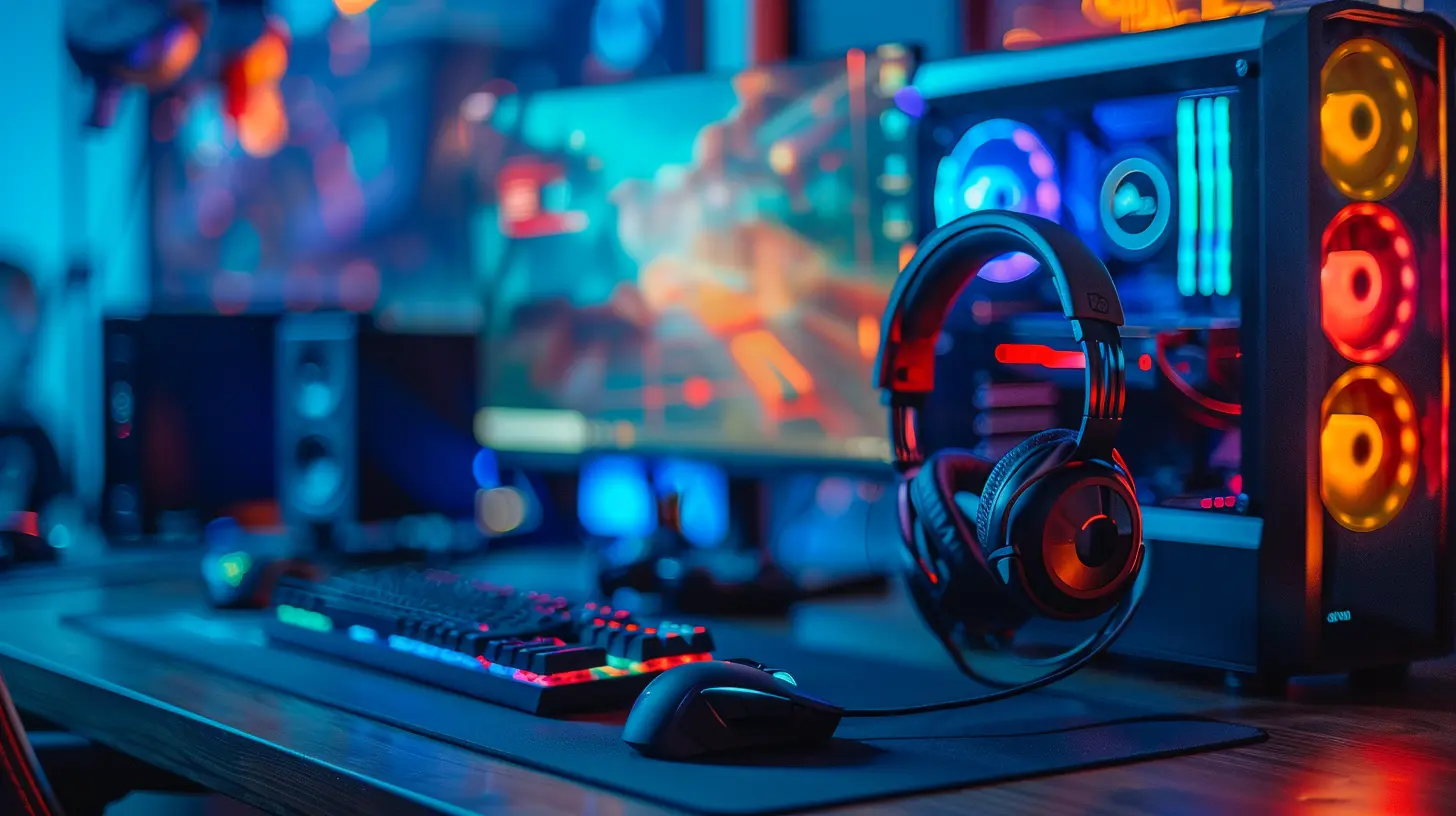
4. Storage (SSD vs HDD): Load Times and Game Performance
Gone are the days of watching spinny disks hum away while your game loads (unless you're a fan of retro tech). SSDs are now the standard, and if you haven’t made the jump yet, you're seriously missing out.SSD vs HDD:
- HDDs: Still cheap per GB but slow as molasses.- SATA SSDs: Much faster loading times, decent price-performance ratio.
- NVMe SSDs (M.2): blazing-fast speeds—up to 5x faster than SATA SSDs.
What To Aim For:
- Minimum: 500GB SSD- Ideal: 1TB NVMe SSD for games + optional HDD for storage
Fast storage doesn’t just reduce loading times. It improves world streaming in open-world games and reduces texture pop-ins. So yeah—it’s kind of a big deal.
5. Motherboard: The Unsung Hero
Most gamers overlook this one. But trust me, your motherboard is more than just a place to plug everything in. It dictates your expandability, connectivity, and even cooling potential.What To Look For:
- Chipset Compatibility: Make sure it matches your CPU (e.g., B550 for Ryzen, Z690 for Intel).- Expansion Slots: PCIe 4.0 or 5.0 for future-proofing.
- M.2 Slots: The more, the merrier for SSDs.
- USB Ports and Headers: You’ll need enough for peripherals and RGB doodads.
Don’t skimp too much here. A good motherboard makes future upgrades way smoother.
6. Power Supply Unit (PSU): The Lifeline
If a gaming PC were a human body, the PSU would be the heart—quietly pumping power to every component. Skimping on this is like putting cheap gas in a Ferrari.Key Features:
- Wattage: Aim for at least 650W for a mid-range build. Go higher if you’re running high-end GPUs.- 80 Plus Rating: Bronze is decent, Gold is much better. It means better efficiency.
- Modular Cables: Easier cable management and better airflow.
Bad PSU = random shutdowns, fried parts, and a lot of stress. Not worth the risk.
7. Cooling System: Keep Your Rig Chill
Your components generate heat—like, a lot. And heat is the ultimate performance killer. No one likes a PC that feels like a jet engine or one that throttles performance when things get hot.Cooling Options:
- Air Cooling: Budget-friendly, plenty effective. Get a good tower cooler.- Liquid Cooling (AIOs): Quieter and cooler under heavy load, but a bit pricier.
Also, make sure your case has good airflow—intake fans in the front, outtake fans at the back/top. Keep it breezy!
8. Monitors: Where the Magic Happens
What’s the point of having beastly hardware if you’re still gaming on a monitor from 2012?Key Specs:
- Resolution: 1080p is still fine, 1440p is the sweet spot, 4K is premium.- Refresh Rate: 144Hz offers smoother gameplay than standard 60Hz.
- Response Time: Aim for 1ms if you play competitive shooters.
Also, consider G-SYNC or FreeSync support to eliminate screen tearing—your eyes will thank you.
9. Peripherals: The Cherry on Top
While these aren’t internal hardware, they play a big role in your gaming comfort and performance. A responsive mouse and keyboard can be the difference between a win and a rage-quit.Gaming Mouse:
- Adjustable DPI- Ergonomic grip
- Extra buttons for macros (if you're into MMOs or MOBAs)
Mechanical Keyboard:
- Tactile, responsive keys- RGB (because, why not?)
- N-key rollover for better input accuracy
Headset:
- Surround sound- Solid mic quality
- Comfortable ear cups for those all-nighters
10. Future-Proofing: Think Ahead!
Gaming evolves fast—like, really fast. What’s cutting edge now might feel outdated in just a couple of years. So when you're picking your components, ask yourself:- Will I want to play games in 4K next year?
- Can I upgrade this part later without replacing everything?
- Is this motherboard compatible with next-gen hardware?
Spending a bit more now can save you a whole lot later. Think long-term.
Final Thoughts
Gaming is more than a hobby—it’s an experience. Building a rig that matches your gaming lifestyle is part strategy, part passion. It’s not just about throwing cash at the most expensive parts. It’s about balance, compatibility, and making sure each component complements the other.So the next time you’re eyeing an upgrade or building your very first PC, remember these essentials. Keep it cool, keep it fast, and—most importantly—make it yours.
Happy gaming, champ.
all images in this post were generated using AI tools
Category:
Gaming HardwareAuthor:

Lana Johnson
Discussion
rate this article
2 comments
Genevieve Harmon
Oh sure, because we all have endless budgets for these "top features." Just waiting for the magical money trees to sprout!
April 26, 2026 at 3:52 AM
Lana Johnson
I understand the budget constraints; the goal is to highlight features that offer the best value for performance, helping gamers make informed choices within their means.
Karly Stevens
Game on with the best!
April 25, 2026 at 3:27 AM
Lana Johnson
Thanks for the enthusiasm! Happy gaming!