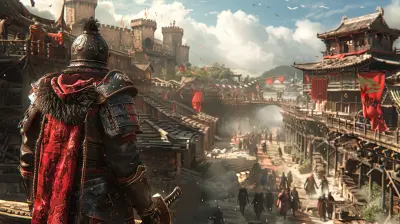
How Game Engines are Evolving to Support Photorealism
1 December 2025
Imagine walking through a game so real you'd swear it was a dream. The sunlight glimmers through the trees, its golden rays dancing across the leaves. Your footsteps crunch against gravel, and as you peer into a pond, you catch sight of a perfectly mirrored sky. No, this isn't some sci-fi alternate reality – it's the future of gaming. And the magic behind this wizardry? Game engines.
Game engines have come a long way from pixelated landscapes and blocky characters. They’re evolving at breakneck speed, striving to blur the line between virtual worlds and reality. Photorealism is no longer just a buzzword; it's quickly becoming a standard that developers and gamers alike crave. So, how are game engines pulling this off? Let’s dive deep into the evolution of game engines and how they’re inching closer to creating digital worlds that are indistinguishable from real life. 
The Dawn of Graphics: From Pixels to Possibilities
Remember the days of 8-bit graphics? Those chunky, colorful pixels that gave us games like Super Mario Bros and Pac-Man? Ah, simpler times. Back then, we weren't chasing photorealism—we were just happy to see moving characters on a screen.But as technology advanced, so did our appetite for realism. Game engines like id Tech and Unreal Engine began pushing boundaries, introducing textured environments, 3D models, and dynamic lighting. Suddenly, games weren’t just games – they were worlds waiting to be explored.
Fast forward a couple of decades, and graphics have skyrocketed. Now, we’re no longer content with textured polygons. We want every strand of hair, every ripple in the water, every blade of grass to look as real as what we see outside our windows. 
What Exactly Is Photorealism in Gaming?
Photorealism, in simple terms, is the ability for games to look as lifelike as possible. It’s like staring at a painting so detailed and accurate you can’t tell if it’s a photograph or brushstrokes on canvas.But here’s the catch: achieving photorealism in games isn’t just about prettier graphics. It’s about blending a cocktail of advanced technologies, including lighting, textures, physics, and rendering techniques, to create an immersive experience that feels authentic.
It’s the difference between watching a cartoon and standing in a bustling New York street. One feels imaginary; the other pulls you in and makes you believe you’re there. 
The Pillars of Photorealism: How It All Comes Together
Creating photorealistic games is no easy feat. Game engines need to rely on several core technologies to pull it off. Here’s a breakdown of some of the major elements driving this evolution:1. Ray Tracing: Lighting’s Golden Hour
Think about how light behaves in the real world. It bounces, scatters, and reflects off surfaces, creating soft shadows and vibrant highlights. Ray tracing simulates this effect to bring lifelike lighting into virtual environments.Older games relied on static, baked-in lighting. It looked decent, but it wasn’t dynamic. Ray tracing, on the other hand, calculates light in real time, allowing for stunning reflections, natural shadows, and a depth that’ll make you pause mid-game just to admire the view.
Take Cyberpunk 2077, for instance. With ray tracing turned on, the neon-soaked streets of Night City explode with life, making every wet sidewalk and glowing billboard feel tangible.
2. High-Resolution Textures: Every Detail Matters
Ever zoomed in on a game texture only to see a pixelated mess? High-resolution textures are putting an end to that nightmare.Modern game engines now support incredibly detailed textures, allowing developers to create surfaces that hold up even under the closest scrutiny. Rocks look rough, trees have visible bark grooves, and skin has pores and freckles.
But here’s the challenge: all this detail eats up memory like Pac-Man on a pellet binge. To combat this, engines like Unreal Engine 5 have introduced technologies like Nanite, which allows for the use of film-quality assets without compromising performance.
3. Physically-Based Rendering (PBR): Realism at Its Core
PBR is like the secret recipe for making materials look and react like they would in the real world. Whether it’s the gleam of polished metal, the matte finish of wood, or the transparency of glass, PBR ensures surfaces behave realistically under varying lighting conditions.Without PBR, a medieval suit of armor would either look like a shiny piece of plastic or a dull, textureless blob. With PBR? You can see how the metal catches the sunlight, revealing scratches and smudges from battle.
4. AI-Driven Animations: Breathing Life Into Characters
Creating photorealistic graphics is one thing, but what about movement? Life-like animations are just as crucial.AI-driven tools are stepping in to handle the heavy lifting. Engines now use machine learning to generate realistic character animations, from facial expressions to walking patterns. This technology ensures that NPCs don’t just stand around awkwardly but interact with their environment and deliver lifelike performances.
It’s why a character in The Last of Us Part II feels so human – their expressions, their subtle movements, everything is dripping with authenticity. 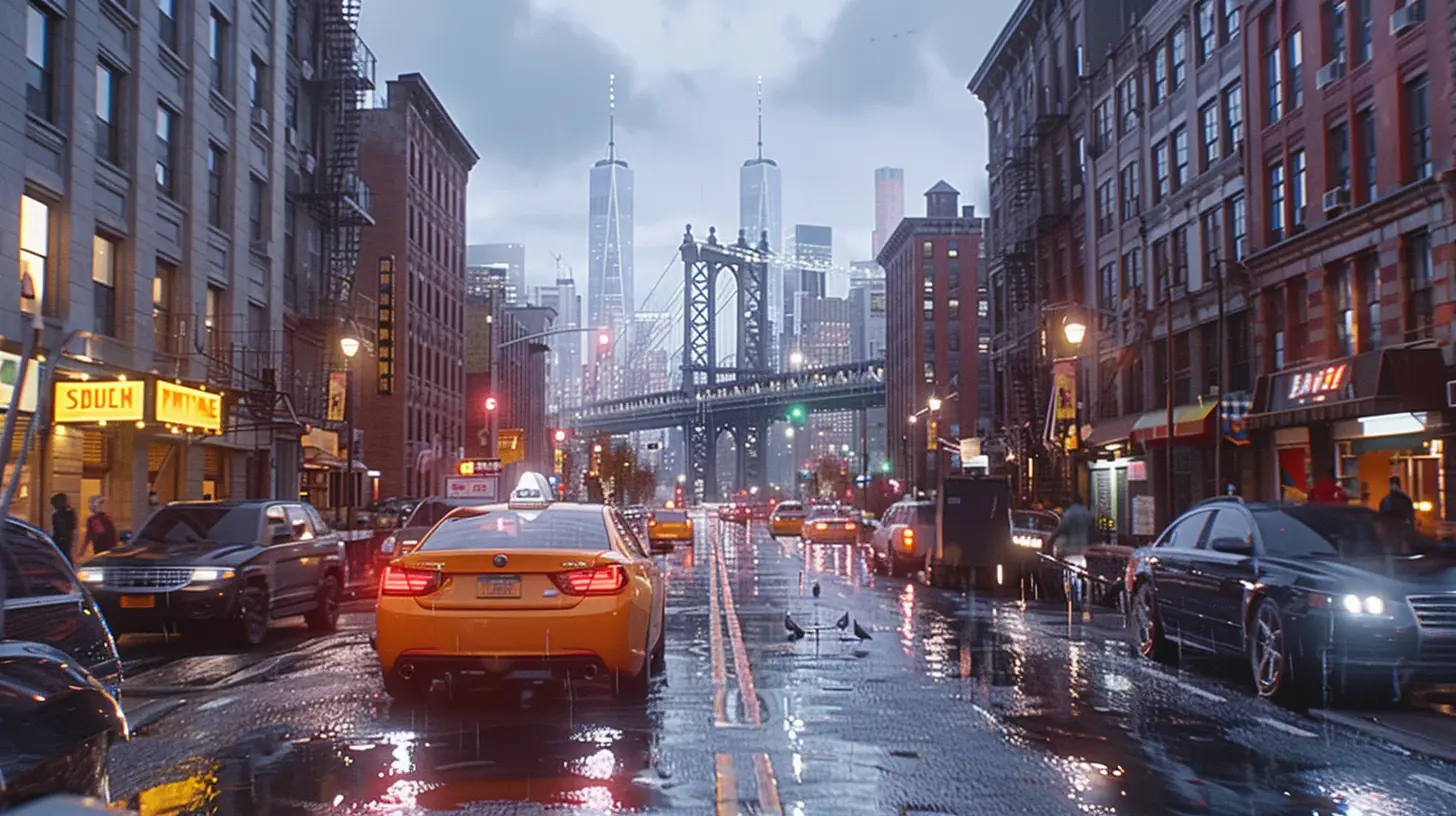
The Hardware Revolution: Powering Photorealism
Of course, none of this is possible without some serious hardware. GPUs (Graphics Processing Units) are the unsung heroes of photorealism, driving the rendering power needed to handle these complex graphical upgrades.The NVIDIA RTX cards, for example, have brought ray tracing to the mainstream, while AMD's latest offerings are closing the gap with their own powerhouse technologies. It’s like upgrading from a candle to a floodlight – the difference is staggering.
And let’s not forget about SSDs. Faster storage speeds mean quicker game loading times and seamless transitions between environments. No one wants to wait around staring at a loading screen when they could be basking in the glow of photorealistic sunsets.
Cloud Gaming: The Next Frontier
Photorealistic gaming isn’t just limited to those with beefy PCs or next-gen consoles. Cloud gaming services like Google Stadia, NVIDIA GeForce Now, and Xbox Cloud Gaming are making high-fidelity graphics accessible to more players than ever before.With the heavy lifting done on remote servers, players can stream ultra-realistic games to their devices without needing top-tier hardware. It’s like renting a sports car – you get all the speed and style without the commitment of owning one.
Challenges and Trade-Offs
As amazing as photorealism sounds, it’s not all sunshine and rainbows. Achieving this level of detail comes with significant challenges.For starters, the development time skyrockets. Creating photorealistic assets and implementing advanced technologies takes time, money, and resources that smaller studios might not have.
There’s also the issue of performance. Not everyone has a high-end PC or the latest console, and photorealistic games often require cutting-edge hardware to run smoothly. Developers are tasked with the tricky balancing act of optimizing games for a wide range of systems without compromising their vision.
And let’s not forget the uncanny valley – that eerie feeling we get when something looks almost real, but not quite. Striking the perfect balance between realism and artistry is a delicate dance that game developers wrestle with constantly.
Looking to the Future
So, what’s next for photorealism and game engines? If the current trajectory is anything to go by, we’re likely to see even faster, more efficient rendering techniques, deeper integration of AI, and mind-boggling advancements in virtual reality.Imagine playing a VR game where you can’t distinguish between the digital environment and your living room. Or walking through an open-world game so real you could swear you felt the breeze against your skin.
The possibilities are endless, and game engines are the driving force behind it all.
Final Thoughts
Game engines are evolving in ways we couldn’t have dreamed of just a few decades ago. They’re breaking boundaries, pushing realism to its limits, and turning digital landscapes into works of art.Photorealism in gaming isn’t just a trend – it’s the future. As technologies like ray tracing, AI-driven animations, and high-resolution textures continue to develop, we’re inching closer to virtual worlds that feel as real as the ground beneath our feet.
So, the next time you boot up your favorite game and marvel at the breathtaking graphics, take a moment to appreciate the game engine working tirelessly behind the scenes. It’s not just code – it’s the heart and soul of modern gaming.
all images in this post were generated using AI tools
Category:
Realism In GamesAuthor:

Lana Johnson
Discussion
rate this article
2 comments
Oren McNeal
Great article! It's fascinating to see how game engines are pushing the boundaries of photorealism. The advancements in lighting, textures, and AI truly enhance immersion, making virtual worlds more lifelike than ever.
December 2, 2025 at 4:17 PM
Lana Johnson
Thank you! I’m glad you enjoyed it. The evolution of game engines is indeed transforming virtual experiences into stunningly realistic worlds.
Julia McKibben
Game engines are evolving faster than my ability to keep up with laundry. At this rate, I’ll be able to stare at my virtual friends’ lifelike eyebrows while neglecting my own—talk about photorealism priorities!
December 2, 2025 at 4:47 AM
Lana Johnson
Haha, that’s the struggle! It’s amazing how far game engines have come—let’s hope there’s a virtual laundry solution on the horizon too!