Gaming Laptops vs Desktops: What’s Right for You?
1 July 2026
Let’s be real — deciding between a gaming laptop and a desktop can feel like picking sides in a never-ending war. You’ve got portability versus performance, convenience versus customization, all wrapped up in flashing RGB lights and liquid-cooled bragging rights.
If you’re stuck on the fence, you’re not alone. Whether you're a casual gamer eyeing performance on the go or a hardcore enthusiast wanting to max out settings, the choice isn’t as black and white as it seems.
So, let's break this down — no fluff, just straight talk. By the end of this article, you'll have a clear idea of what suits your gaming lifestyle best.
Why This Debate Even Exists
Before we dive into the nitty-gritty, let’s address the elephant in the room — why is this even a thing? Simple: both gaming laptops and desktops have evolved a lot.Ten years ago, desktops ruled the scene, and laptops were considered underpowered cousins. Today? Laptops are giving desktops a serious run for their money. With powerful GPUs, high refresh rate screens, and sleek designs, modern gaming laptops are beasts in their own right.
But does that mean they’re better? Not necessarily.
Portability: The Laptop’s Ace in the Hole
Let's kick things off with one of the most obvious — but also important — differences: portability.Laptops: Game Anywhere
If you travel a lot, crash at friends' places regularly, or just like gaming from your bed, laptops win hands down. You can take them to school, work, or even to the bathroom (no judgment here).Need to head to a LAN party or a weekend trip? Toss your laptop in a backpack, and you’re good to go. Desktops? Not so much.
Desktops: Stationary by Nature
Desktops are like that vintage muscle car in your garage — powerful but not going anywhere. They’re meant to stay put. So if you’re someone who parks themselves at a desk and rarely moves, this isn’t a downside. But don’t expect to pick it up and go.Verdict? If mobility matters even a little, go laptop.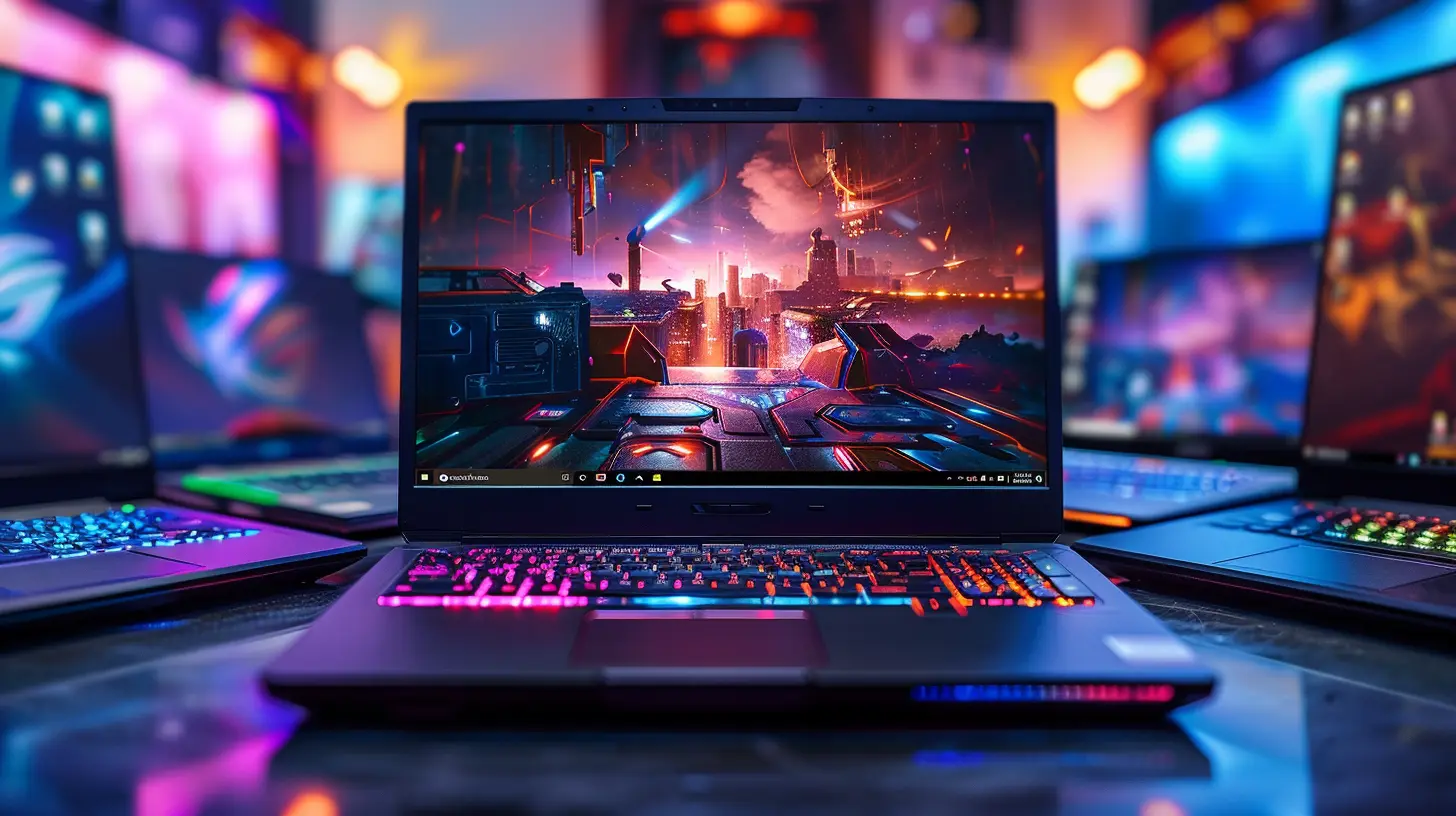
Performance: Desktops Still Wear the Crown
Here’s where desktops flex their muscles. Pure performance.Desktop PCs: Unbeatable Power
Want to run AAA titles on ultra settings with zero compromise? A desktop has you covered. Desktops have more room (literally) for better GPUs, better CPUs, and bigger cooling systems. Even if a laptop tries to match specs on paper, the desktop version will outperform it. Every. Single. Time.Why? Thermal limits in laptops mean less wattage, therefore less raw power.
Laptops: Surprisingly Capable
To be fair, gaming laptops have come a long way. They can handle games like Cyberpunk 2077, Elden Ring, or even high-end VR — just not at the same performance level or consistency. They’re impressive, no doubt, but compromises have to be made. Think of it like driving a sports car on a narrow road — it can go fast, but the road (heat limits) holds it back.Verdict? If you’re chasing benchmarks or future-proofing, desktop takes the W.
Upgradability: One’s for Tinkerers, One’s Not
If you’re the kind of person who enjoys cracking open your rig, swapping parts, and upgrading over time, you’ll want to pay close attention here.Desktops: The Tinkerer's Playground
Desktops are basically LEGO for adults. Want a new GPU? Swap it out. More RAM? Easy. A better CPU cooler? No problem. You can tailor your build exactly how you like it—and keep it current for years without replacing the whole thing.Laptops: Limited Options
Most gaming laptops are what you see is what you get. RAM and storage upgrades? Maybe. Beyond that? You're stuck. Even if you paid top dollar, your ability to upgrade is severely limited. Plus, opening them up can void warranties or even fry components if you’re not careful.Verdict? Desktop is the obvious choice if you value longevity and customization.
Price: The Tricky Truth
Here’s where it gets a little interesting. At first glance, laptops may seem cheaper. But let’s dig a bit deeper.Laptops: Pay for Portability
You’re essentially paying a premium for the convenience of portability. A gaming laptop with desktop-equivalent performance? It’s going to cost you. And don’t forget — better cooling, battery, display, and portability all factor into that higher price point.Desktops: Bang for Buck
For the same price, desktops offer more performance. Why? No need for batteries, portables screens, or tight thermal management. Every dollar goes into making it stronger, not lighter or smaller.There’s also a hidden cost with laptops: they're harder (and often more expensive) to repair.
Verdict? Desktops usually win on raw value per dollar.
Display & Peripherals: Built-In vs. Buy Separate
Let’s talk screens, keyboards, and other gear.Laptops: All-in-One
Gaming laptops come with a built-in monitor and keyboard. That’s convenient. High-refresh-rate screens (120Hz, 144Hz, or even 240Hz) are becoming standard in mid to high-end models. You also get portability without carrying another monitor, which is a plus.Desktops: Choice Galore
Desktops give you freedom. Want a curved ultrawide 1440p monitor? Go for it. Mechanical RGB keyboard with custom switches? Done. You can build your dream setup piece by piece. Sure, it adds to the cost, but the flexibility and comfort are unmatched.Verdict? Laptops are easier out of the box, but desktops win for those wanting a personalized experience.
Cooling & Noise: The Silent Players
Heat is performance’s worst enemy, and noisy fans? Just annoying.Laptops: Hot and Loud
Gaming laptops run hot, and when that CPU/GPU combo gets cooking, the fans kick in like jet engines. Expect warm palm rests and background noise while playing demanding titles.Desktops: Cool and Quiet (Mostly)
With larger cases and better airflow, desktops manage heat far more efficiently. You can even add liquid cooling setups for ultra-quiet operation. And since desktops aren’t confined in tight spaces, the fans don’t need to work as hard.Verdict? Desktops definitely have the edge in thermal and noise management.
Battery Life: No Contest
Let’s just be blunt — gaming laptops suck at battery life. Why? Because gaming hardware eats power like candy.Even high-end gaming laptops often struggle to deliver more than 2-3 hours of heavy gaming without being plugged in. And when they’re not plugged in? Performance drops. Drastically.
Desktops, of course, have no batteries. They're always hooked up. So this one isn’t really a comparison.
Verdict? Laptops offer some gaming unshackled from the wall, but they’re not marathon runners.
Aesthetic & Setup: Minimalism or Maximalism?
Sometimes, the look and feel matter as much as the tech.Laptops: Clean and Simple
No cords all over the place, no clunky towers—just a sleek unit and maybe a mouse. Perfect for small rooms, dorms, or minimalist setups.Desktops: Statement Piece
A custom-built rig with RGB lighting is a centerpiece, not a corner setup. Add in dual or triple-monitor setups, mood lighting, a sick chair—and bam, you’re on your way to Twitch stardom (or at least looking like it).Verdict? Laptops keep it tidy. Desktops show off. Pick your aesthetic.
Maintenance & Durability
Let’s be honest. Stuff breaks.Laptops: More Fragile
One drop or spill, and things can get real expensive. Plus, dust buildup is harder to clean. Maintenance is limited, and repairs are often specific to the model.Desktops: Easier Fixes
Desktops are easier to open, clean, diagnose, and replace parts yourself. If a fan dies or your GPU needs replacing, it’s usually a straightforward fix.Verdict? Desktops are the better choice for DIY maintenance and long-term care.
So… Which One’s Right for You?
Now to the big question — what should you go for?Go for a Gaming Laptop if:
- You travel or move around a lot.- You're limited on space.
- You want plug-and-play simplicity.
- You care more about convenience than raw power.
Go for a Gaming Desktop if:
- You want max performance.- You plan on upgrading hardware later.
- You have a permanent gaming setup area.
- You want the best value for your budget.
Here’s a quick analogy:
> A gaming laptop is like a Swiss Army knife — it can do a lot, anywhere, but it might not be the best at any one thing. A gaming desktop is like a high-end power tool — not portable, but insanely effective.
Final Thoughts
At the end of the day, it's about lifestyle. Ask yourself: where do you game, how much power do you need, and how much flexibility do you want?If you're always moving and want one device that does it all, a gaming laptop might be the ticket. But if you’re all about squeezing every drop of performance, nothing beats a good ol’ desktop.
Whatever you choose, make sure it aligns with how you game — not just what the specs say.
all images in this post were generated using AI tools
Category:
Gaming HardwareAuthor:

Lana Johnson
Discussion
rate this article
1 comments
Velma Reilly
Consider your budget and portability needs when choosing between gaming laptops and desktops.
July 4, 2026 at 4:22 PM
Lana Johnson
That's a great point! Balancing budget and portability is key in making the right choice for your gaming setup.